Silk Mandir · The Weaves
Chapter 03 · The Weaves നെയ്ത്തുകൾ
An encyclopedia of weaves we stock.
തറികളുടെ ഭൂപടം
We travel to nine looms twice a year — Kanchipuram, Banaras, Balaramapuram, Mysore, Patan, Chanderi, Bhagalpur, Paithan, Pochampally. Below: what each saree actually is, where it comes from, the motif you'll see, the weft count to ask for, and the price you can expect.
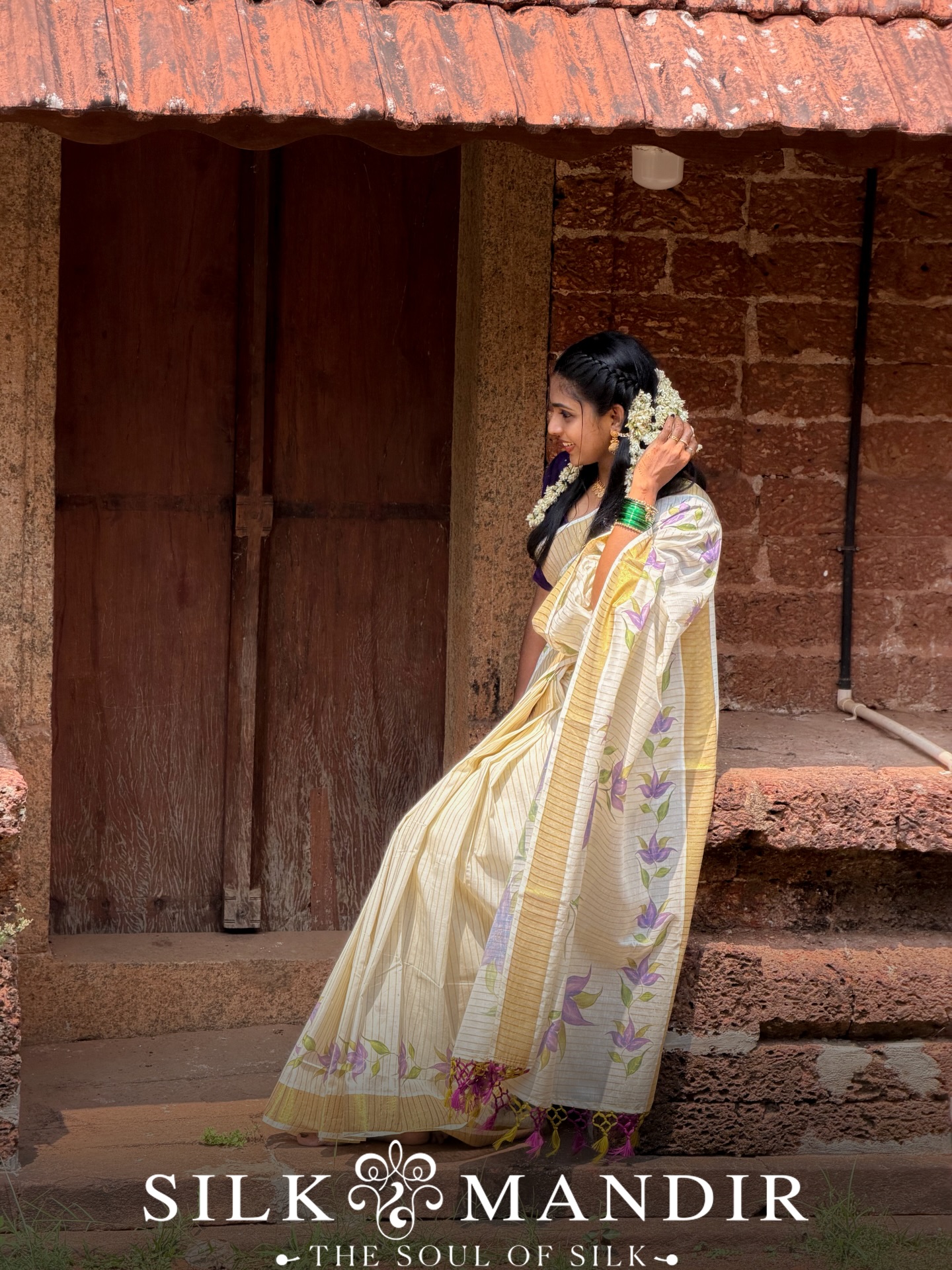
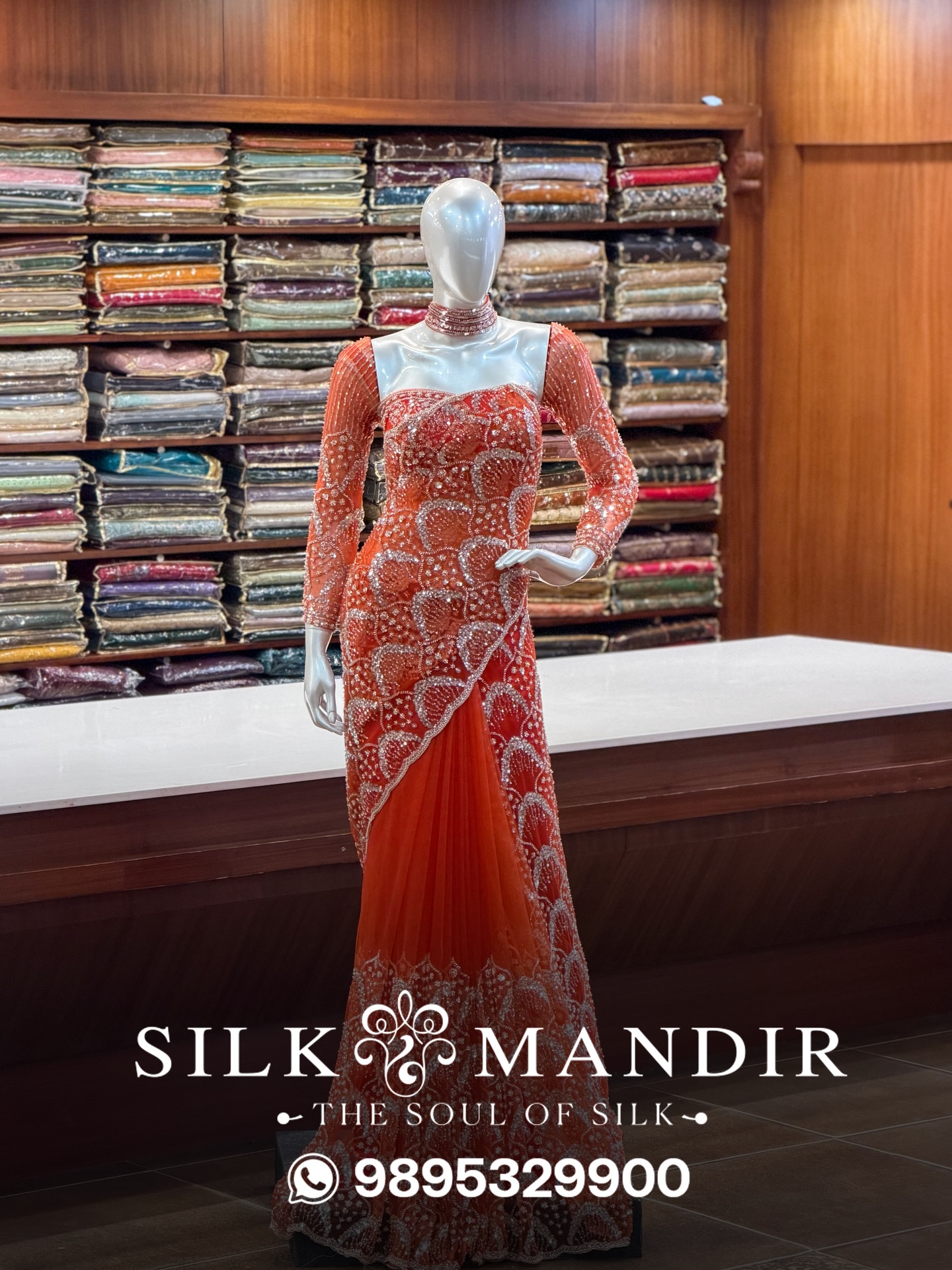 Tamil Nadu · pure silk
No. 01
കാഞ്ചീപുരം
Kanjeevaram — the heaviest saree in the room.
From Kanchipuram, Tamil Nadu. Pure mulberry silk woven on pit-looms with a separate-weft zari border joined to the body by hand — the joint visible only at the inside, the famous "korvai" technique. The pallu carries temple, peacock, mango or annapakshi motifs. A bridal Kanjeevaram weighs upwards of 800 grams.
- Region
- Kanchipuram, TN
- Fibre
- Pure mulberry silk
- Border
- Korvai zari · 5–9 inch
- Motif
- Temple · peacock · mango
- From
- ₹18,000
- Bridal range
- ₹65,000 to ₹2,40,000
 Balaramapuram · cotton + gold
No. 02
കസവ്
Kerala Kasavu — cream cotton, gold border, our hometown.
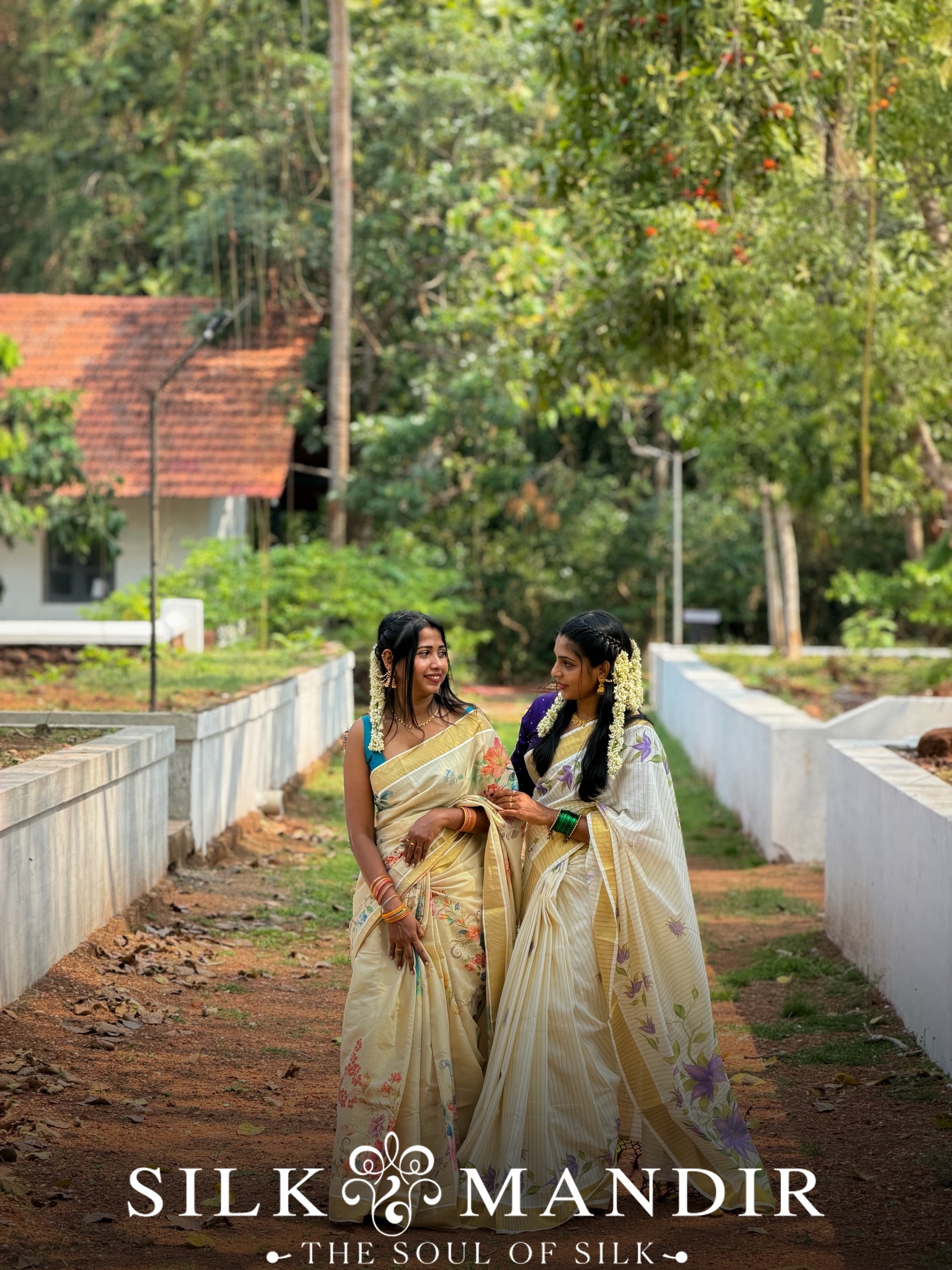
Woven in Balaramapuram and Chendamangalam, Kerala — pure off-white handloom cotton with a real kasavu gold zari border in 1-inch to 4-inch widths. For Onam, Vishu, Thiruvathira, the morning at the temple, the family wedding-of-a-cousin. The cotton is unbleached, so each saree has a slightly different cream — that's not a defect.
- Region
- Balaramapuram · Chendamangalam
- Fibre
- Handloom cotton
- Border
- Real kasavu zari · 1–4 inch
- Motif
- Plain · checked · floral pallu
- From
- ₹3,400
- Tissue range
- ₹6,800 to ₹22,000
 Banaras · katan silk
No. 03
ബനാറസി
Banarasi — Mughal motifs, Persian colours, a Banaras heart.
From Varanasi, Uttar Pradesh. Heavy katan silk with brocade work in real gold or silver zari. Jangla, shikargah, butidar, jamdani — four families of weaving, each with a different rhythm of motifs. A Banarasi takes two weavers three weeks to finish. Look for the woven (not printed) reverse and the slightly stiff hand.
- Region
- Varanasi, UP
- Fibre
- Katan / Tussar / Organza silk
- Border
- Brocade zari · 4–6 inch
- Motif
- Jangla · shikargah · butidar · jamdani
- From
- ₹12,000
- Bridal range
- ₹45,000 to ₹1,80,000
 Mysore · light crepe
No. 04
മൈസൂർ
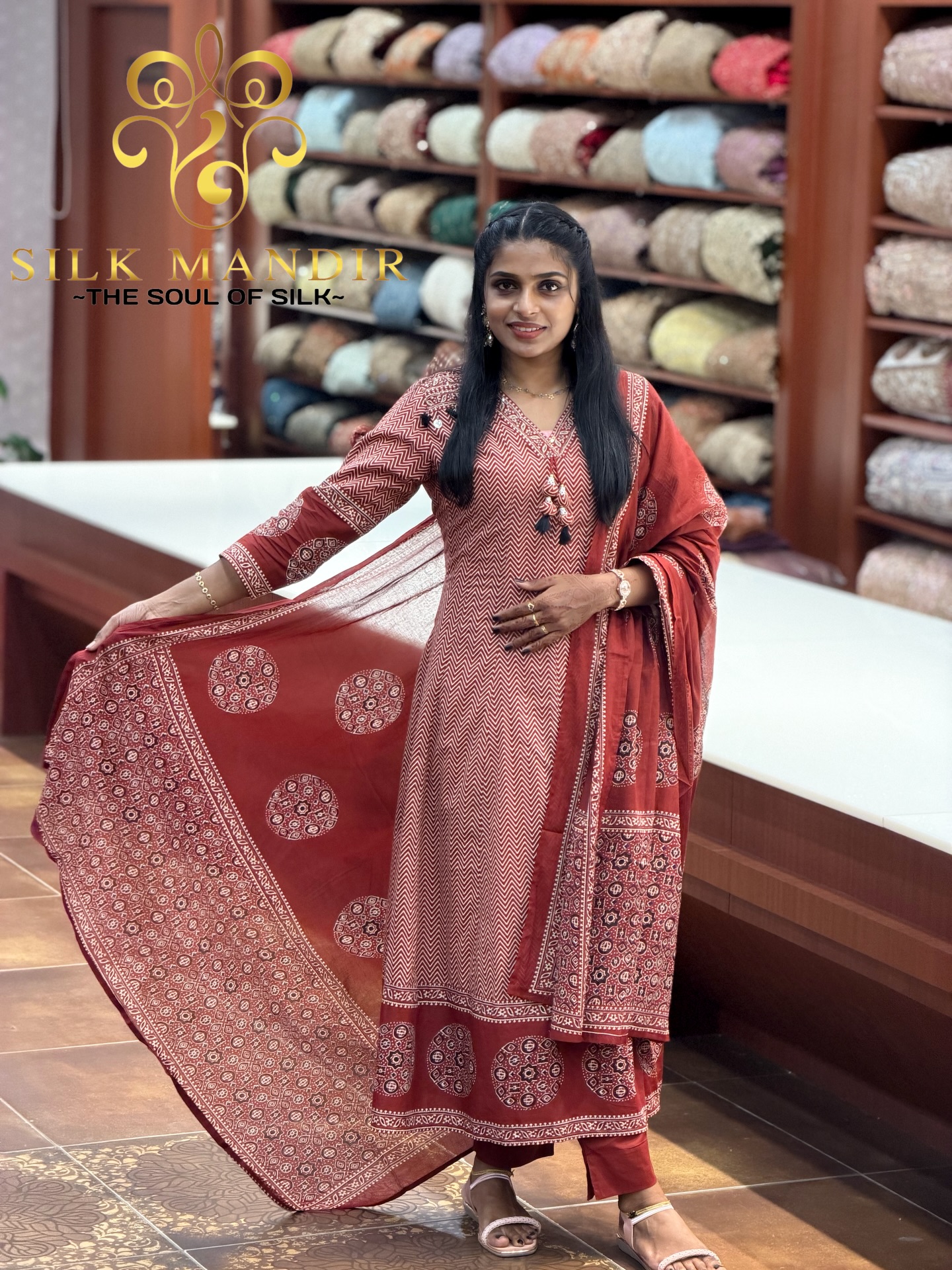
Mysore Crepe — pure silk that drapes like water.
From the KSIC silk house, Mysore, Karnataka. 100% pure mulberry silk in a crepe weave — lighter than a Kanjeevaram, with a matte sheen and a fluid drape. Solid jewel tones with thin zari borders. The Sunday-evening saree, the office party, the brunch with old friends.
- Region
- Mysore, KA
- Fibre
- Pure mulberry · crepe weave
- Border
- Thin zari · 1–2 inch
- Motif
- Solid · stripe · printed pallu
- From
- ₹6,200
- Premium
- ₹14,000 to ₹28,000
 Patan · double ikat
No. 05
പട്ടോള
Patola — heirloom-grade, double-dyed, double-loomed.
From Patan, Gujarat — the Salvi family's six-century craft. Double ikat means both warp and weft are tied and dyed before weaving, so the motif is identical on both sides. A real Patola takes four to six months on the loom; what you'll see here is mostly Rajkot Patola (single-ikat) plus a small reserved shelf of true Patan Patola for collectors.
- Region
- Patan / Rajkot, GJ
- Fibre
- Pure silk · double-ikat
- Border
- Geometric · all-over motif
- Motif
- Naari-kunj · pan-bhat · ratnachowk
- From
- ₹28,000 (Rajkot)
- Patan Patola
- ₹1,80,000 to ₹6,00,000 (reserved)
 Madhya Pradesh · silk-cotton
No. 06
ചന്ദേരി
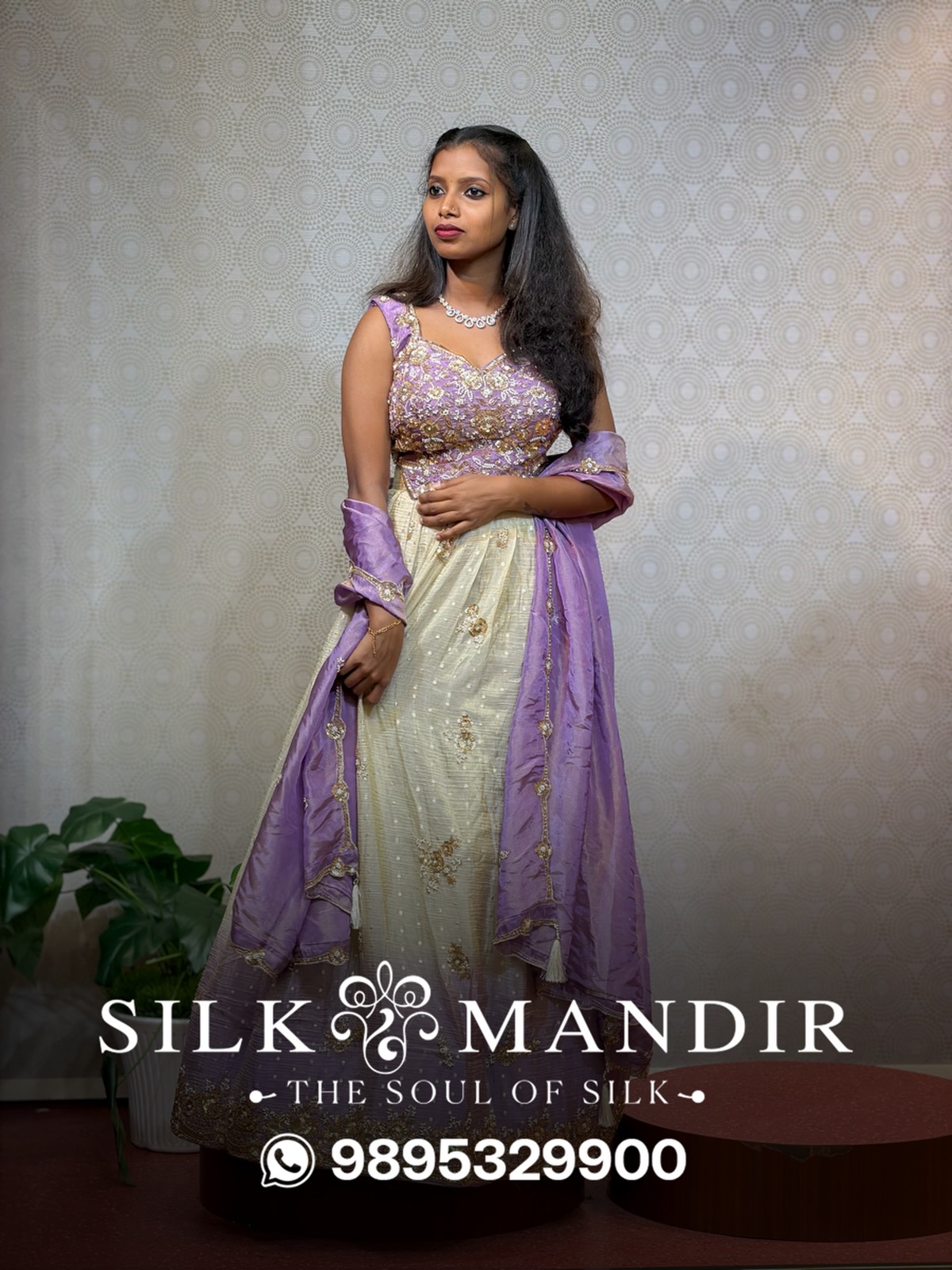
Chanderi — sheer silk-cotton, for the long Kerala summer.
From Chanderi, Madhya Pradesh. A silk-cotton blend with a glassy, transparent finish — light enough to wear in 32°C humidity, with small butis (motifs) scattered across the body and a fine zari border. The everyday wedding-guest saree for Kerala women who don't want to sweat through a Kanjeevaram.
- Region
- Chanderi, MP
- Fibre
- Silk-cotton blend
- Border
- Fine zari · 2–3 inch
- Motif
- Butis · coin · floral pallu
- From
- ₹4,800
- Pure silk
- ₹12,000 to ₹26,000
 Bhagalpur · wild silk
No. 07
തുസർ
Tussar — raw, wild silk, with an earthy hand.
From Bhagalpur, Bihar — and tribal Jharkhand. Tussar is a non-mulberry "wild" silk, with the natural rough hand of the cocoon left in. Earthy palette — bone, mustard, charcoal, oxblood, palmyra green — and often hand-painted Madhubani or kalamkari work on the pallu. The art-curator saree.
- Region
- Bhagalpur · Bhagalpur
- Fibre
- Wild silk (non-mulberry)
- Border
- Natural · zari · hand-painted
- Motif
- Madhubani · kalamkari · ajrakh
- From
- ₹5,200
- Painted
- ₹14,000 to ₹34,000
 Maharashtra · peacock pallu
No. 08
പൈഠണി
Paithani — the queen of silks, with a peacock pallu.
From Paithan, Maharashtra. Pure silk with the entire pallu woven in zari — peacock, lotus or parrot motifs spread across a foot of solid gold. The body is plain or has a small buti. A real Paithani has the pallu motif reversible — same on both sides. Often gifted as bride-wear in Maharashtrian weddings; we keep a small Kerala-customer-friendly shelf in jewel tones.
- Region
- Paithan / Yeola, MH
- Fibre
- Pure mulberry silk
- Border
- Tapestry weave · 5–10 inch
- Motif
- Peacock · lotus · munia parrot
- From
- ₹16,000
- Heavy zari
- ₹48,000 to ₹2,20,000
 Telangana · tie-dye
No. 09
പൊച്ചമ്പള്ളി
Pochampally Ikat — geometry, resolved on the loom.
From Pochampally, Telangana. Single or double ikat — yarns tied, dyed and woven so the pattern emerges as the loom progresses. Geometric, repeating, hypnotic. Often in silk-cotton blends, which makes it the most wearable "art" saree on the rack. Good for women who want pattern without weight.
- Region
- Pochampally / Bhoodan, TS
- Fibre
- Silk · silk-cotton
- Border
- Ikat · contrast
- Motif
- Diamond · checkerboard · parrot
- From
- ₹4,400
- Pure silk
- ₹12,000 to ₹32,000
Read enough? തയ്യാറാണോ?